
01
Static & business
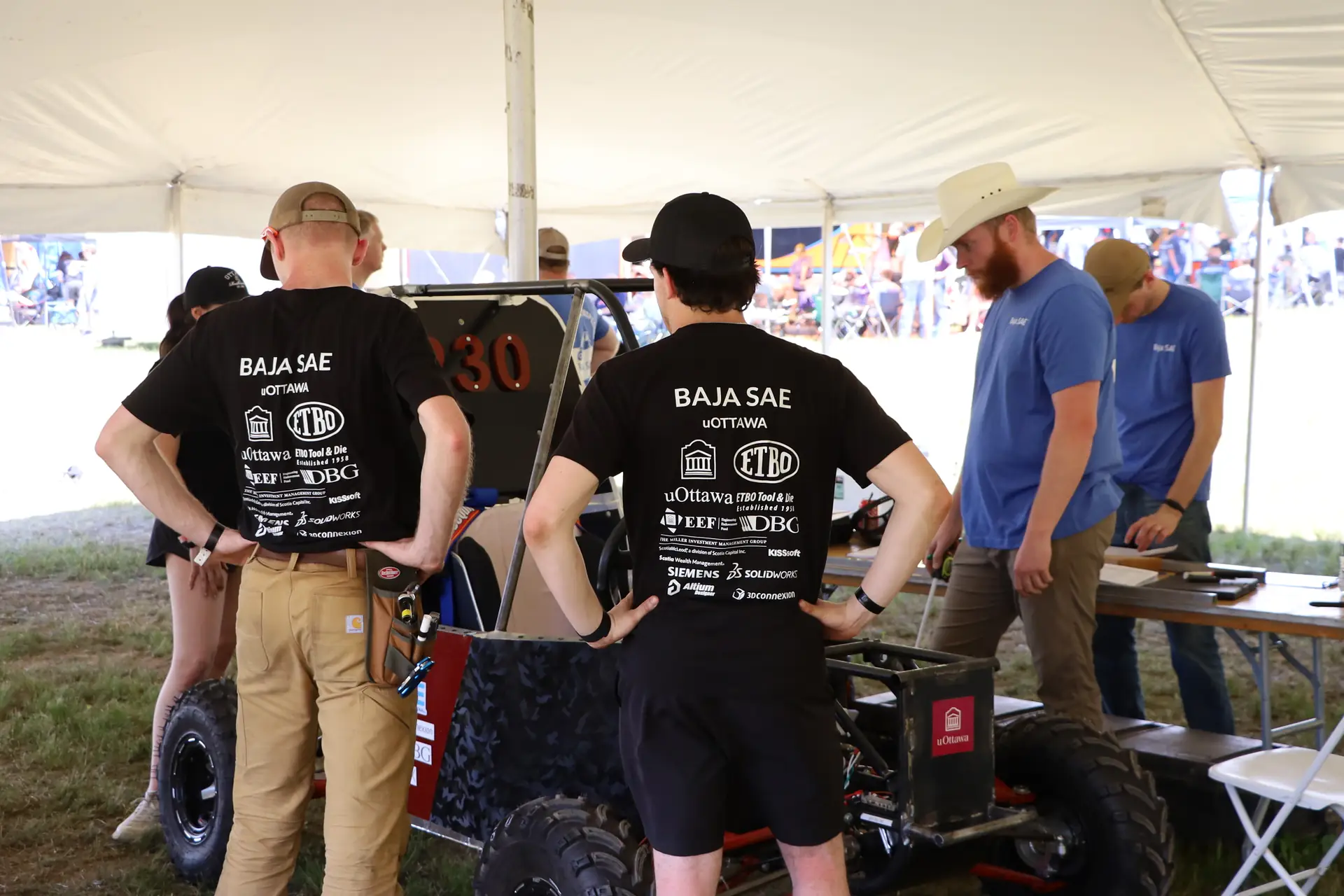
Technical inspection, design judging, a cost report and a sales presentation, defended in front of industry judges.
About us
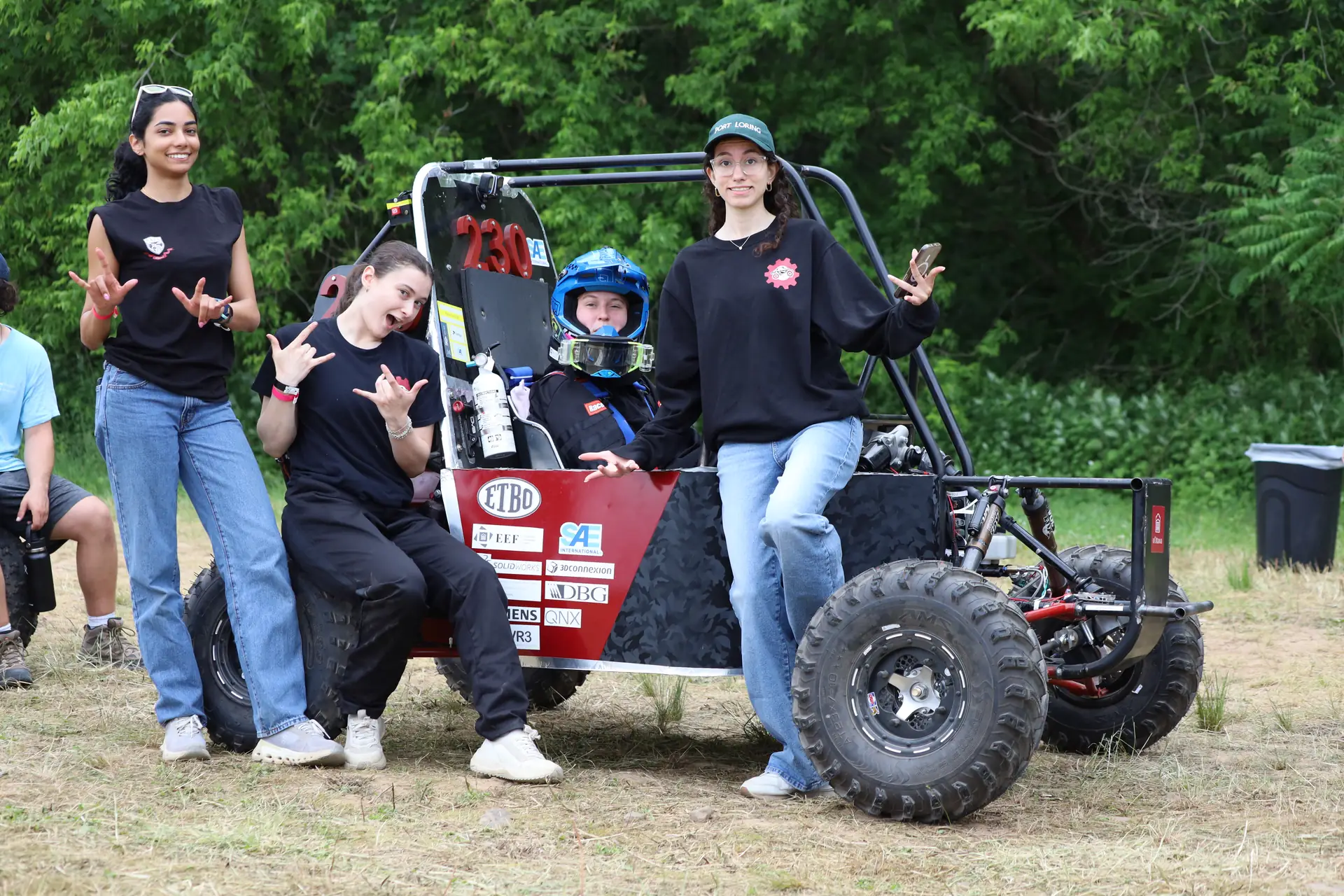
Classroom theory, applied to a complete vehicle, under strict rules, a limited budget and fixed deadlines.
The competition
Baja SAE is an international collegiate design competition organized by SAE International (bajasae.net). Student teams design, manufacture and race a single-seat, all-terrain vehicle that has to withstand rough terrain, jumps, rocks and mud, and complete a multi-hour endurance race.
Every team uses the engine specified by the rules (currently a Kohler CH440, 14 hp stock but restricted to 10 hp by a restrictor plate) and meets the same safety and design requirements. Differences in performance come down to vehicle design, weight, reliability and team execution, not the powertrain.
Teams are also judged on cost, design justification and a sales presentation, all evaluated by practising engineers from industry. It's a head-to-head test of engineering judgement, manufacturing quality and project management.
 Endurance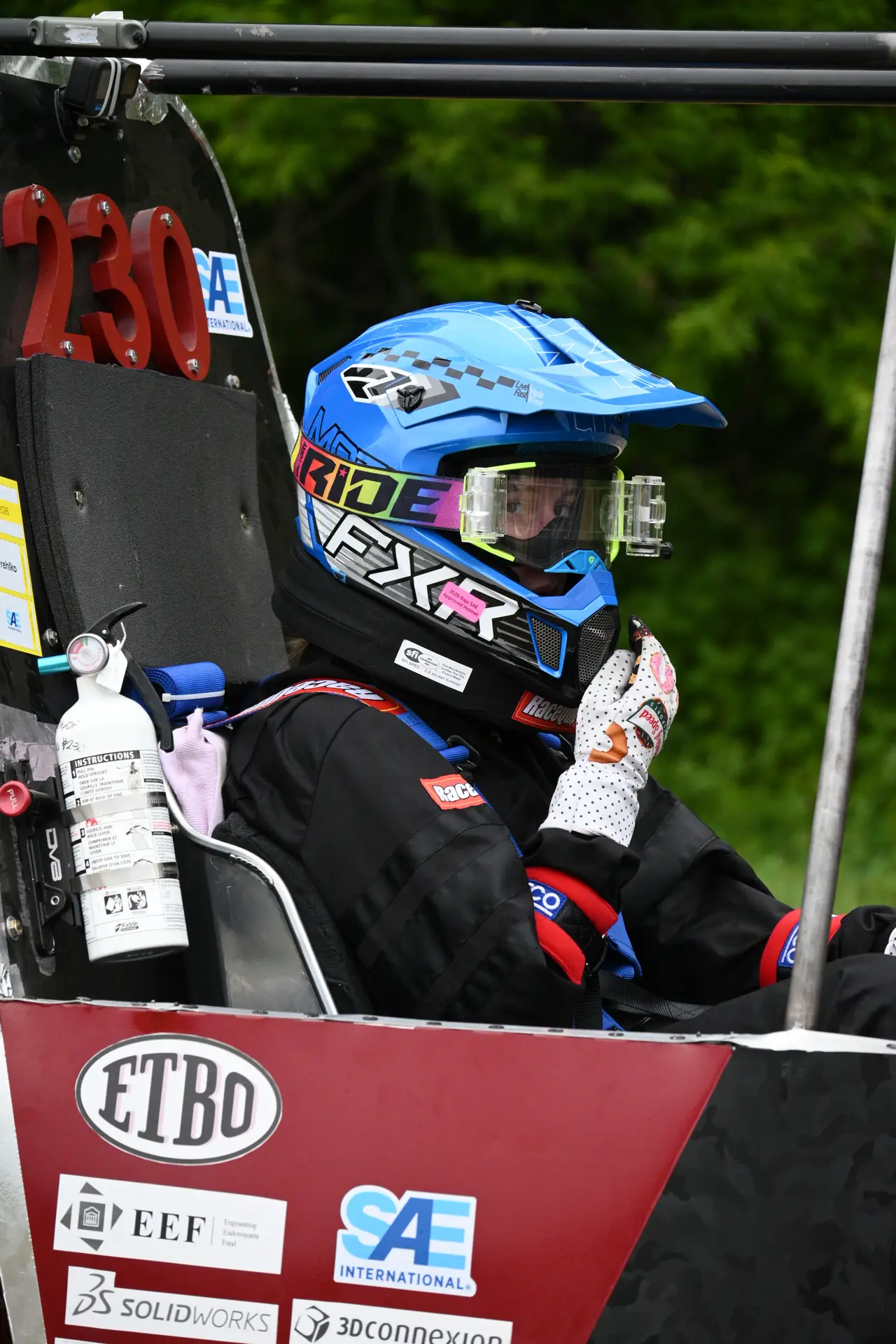
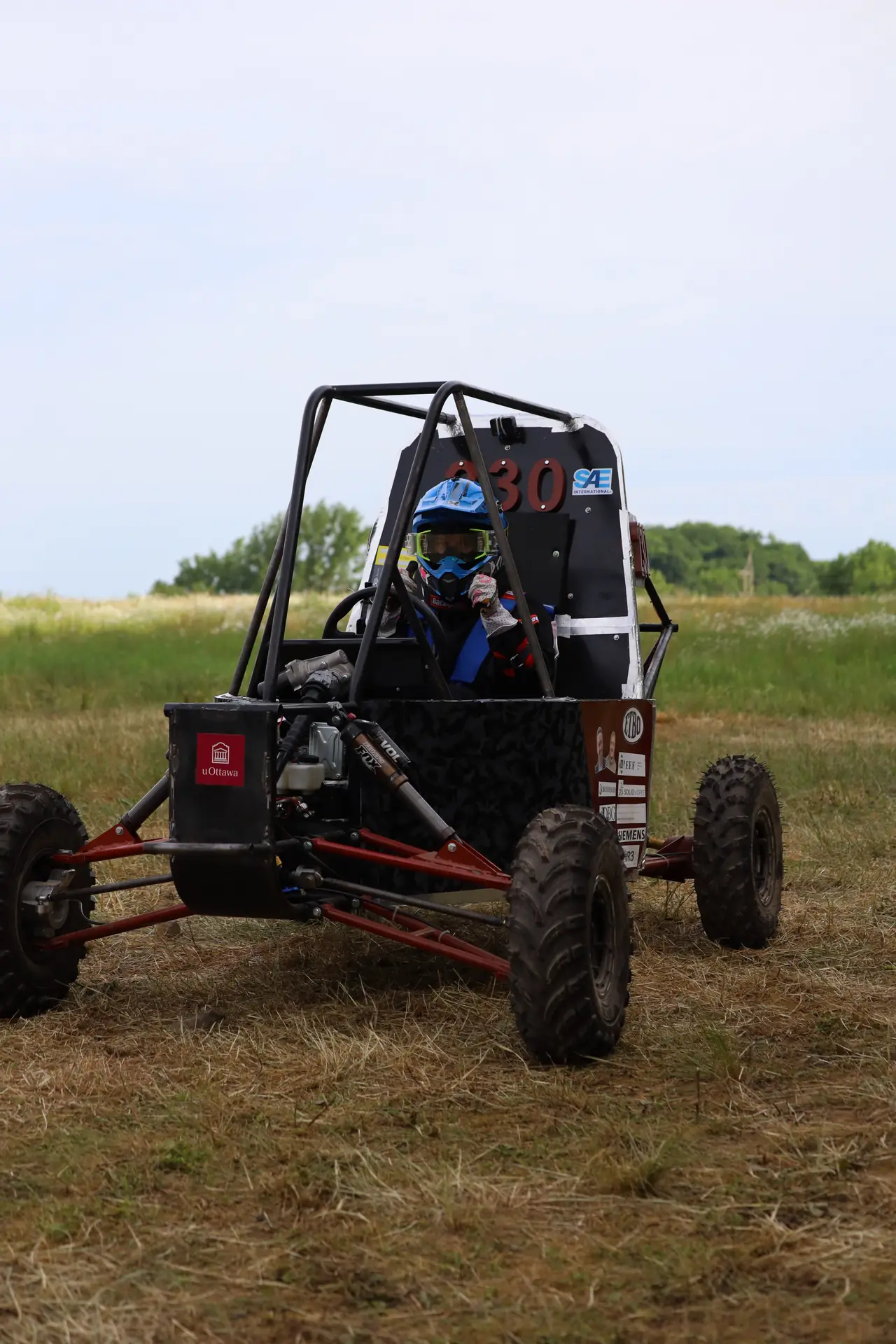
One seat.
Four hours.
Competition format
A Baja SAE event scores the whole program, from the engineering report and cost sheet to how the car holds up after hours of abuse.
Technical inspection, design judging, a cost report and a sales presentation, defended in front of industry judges.
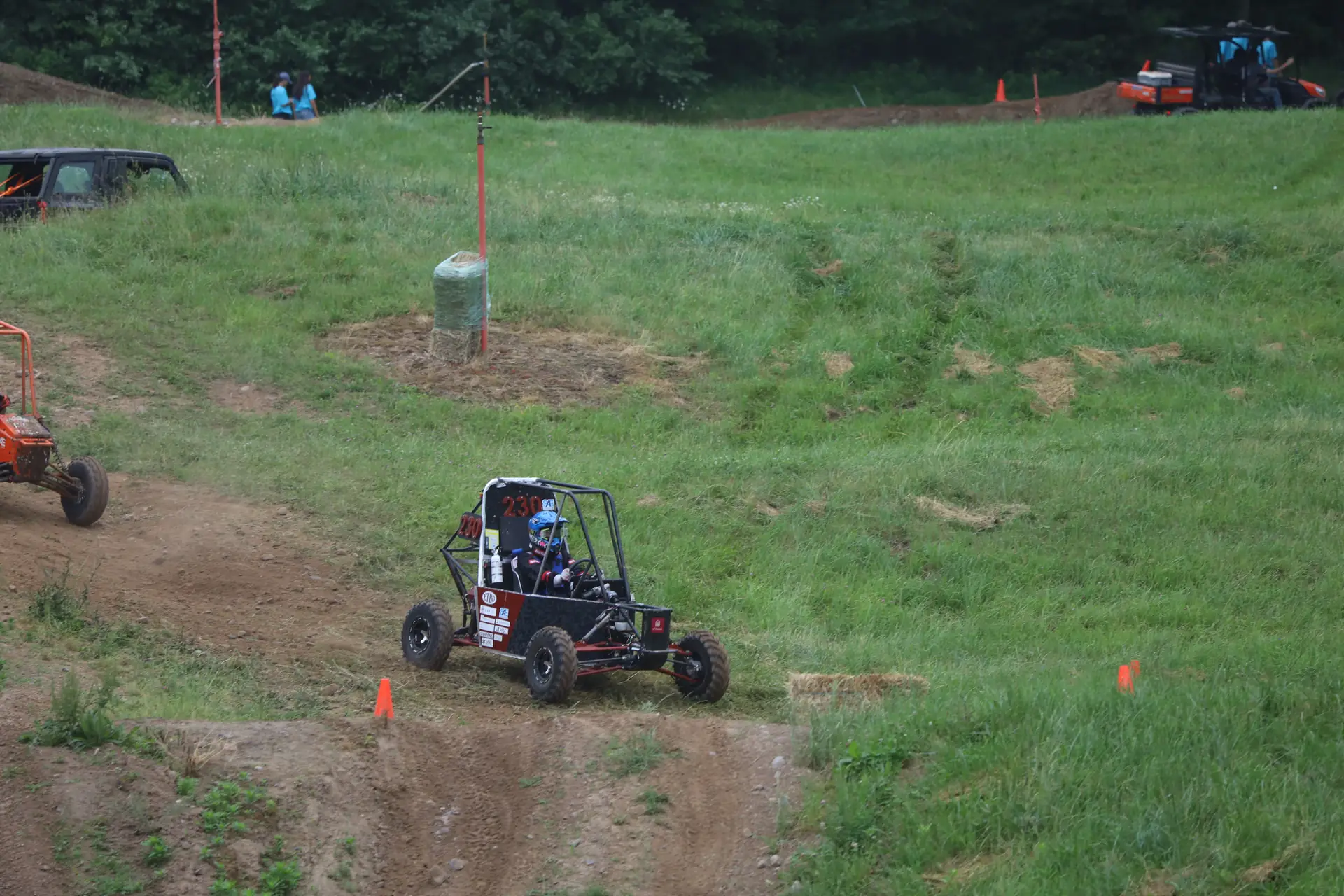
Acceleration, hill climb or traction, manoeuvrability and suspension events under demanding off-road conditions.
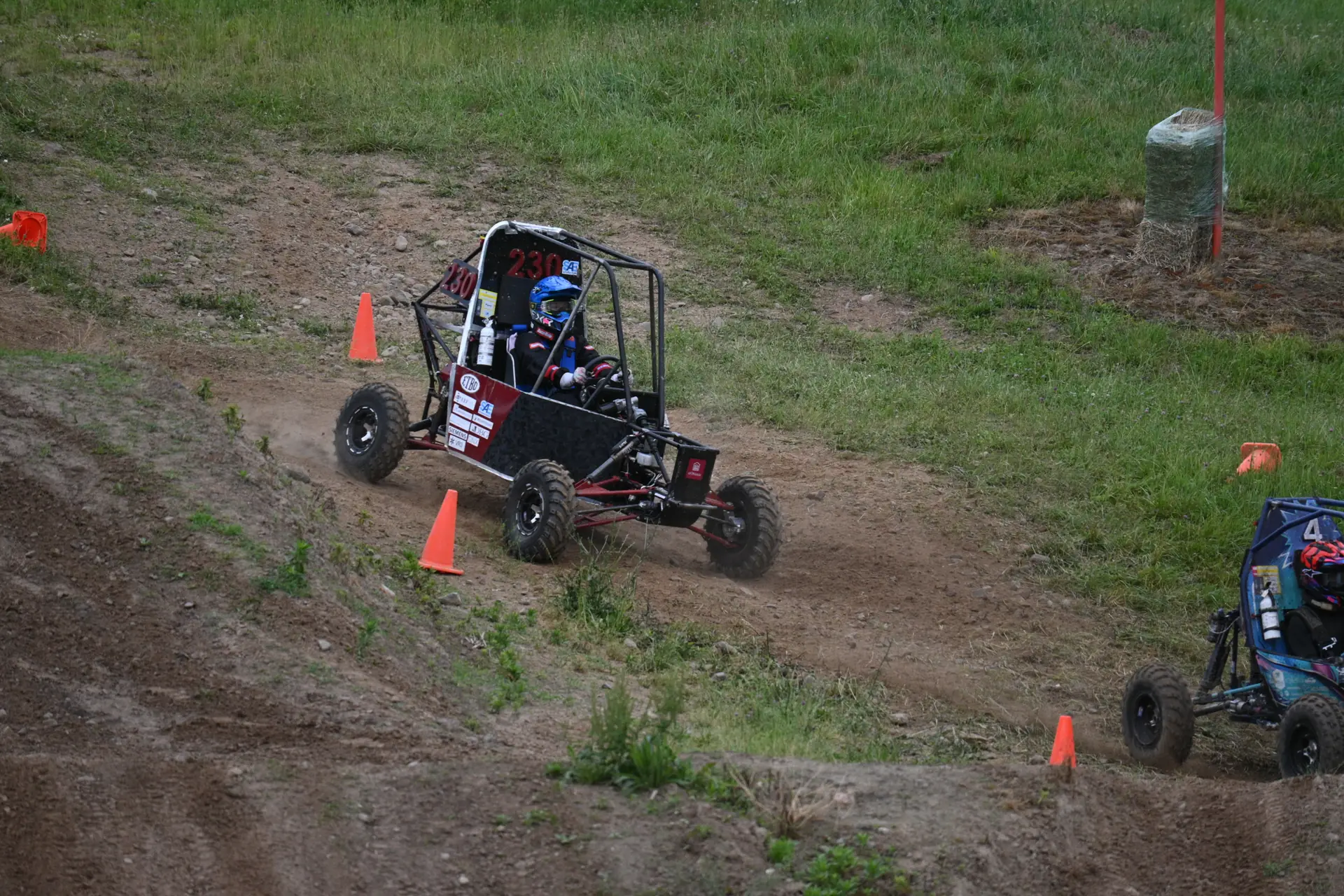
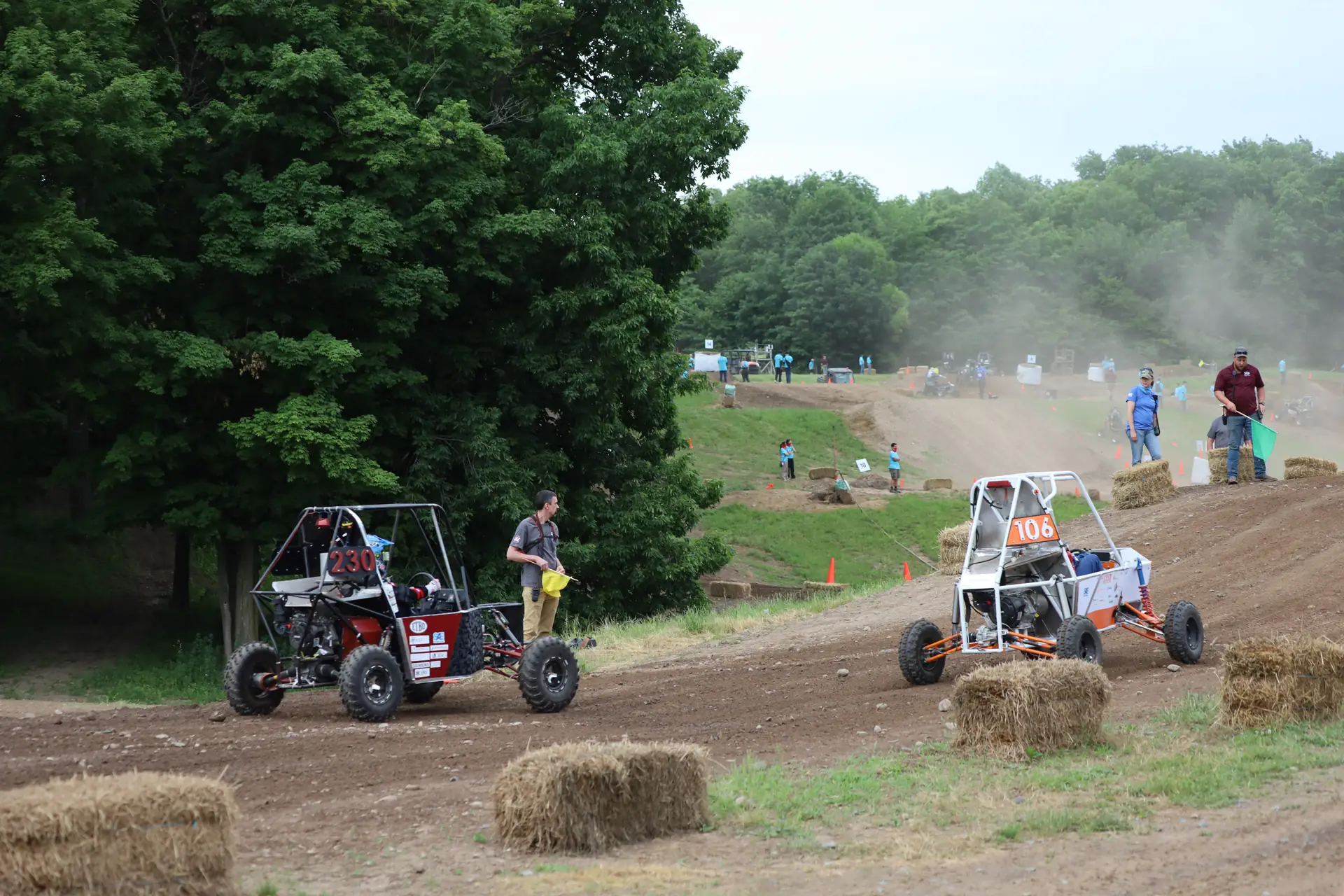
A four-hour wheel-to-wheel race where reliability and pit-crew coordination count as much as outright speed.
The team
Rough Rider Racing (RRR) is the University of Ottawa's Baja SAE team and one of the Faculty of Engineering's competitive design teams, with members from mechanical, electrical, software and computer engineering and other programs.
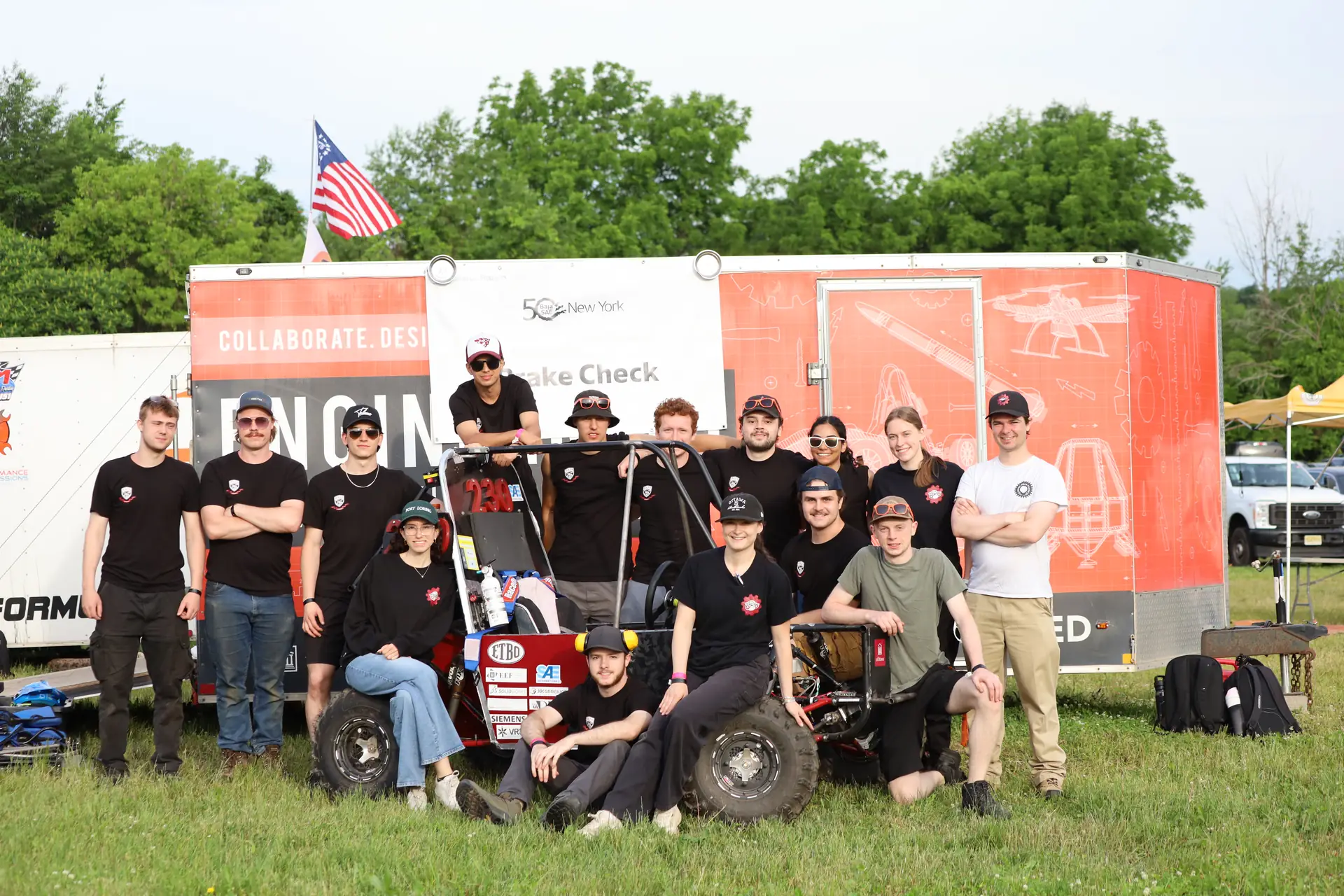 The crew
What members learn
Members graduate with a portfolio of real, tested hardware and the experience of delivering a vehicle to a fixed deadline.
CAD modelling, hand calculations, finite element analysis, design reviews and technical documentation.
Machining, welding, fabrication, wiring, assembly and troubleshooting.
Budgeting, scheduling, risk management, communication and delivery to fixed deadlines.
The process
The program runs on a one-year vehicle cycle: every season the team designs, builds and races a brand-new car. Starting fresh each year raises the design challenge and pushes members toward new solutions instead of carrying old ones forward.
The team is organized into four technical subteams (Chassis, Suspension, Drivetrain and Electrical) and an Administration group responsible for finance, sponsorship, outreach and logistics.
CAD, hand calcs, FEA and design reviews.
Machining, welding, fabrication and wiring, all by students.
Track days and off-road testing to find failures before competition does.
Static judging, dynamic events and endurance, then feed it into the next car.