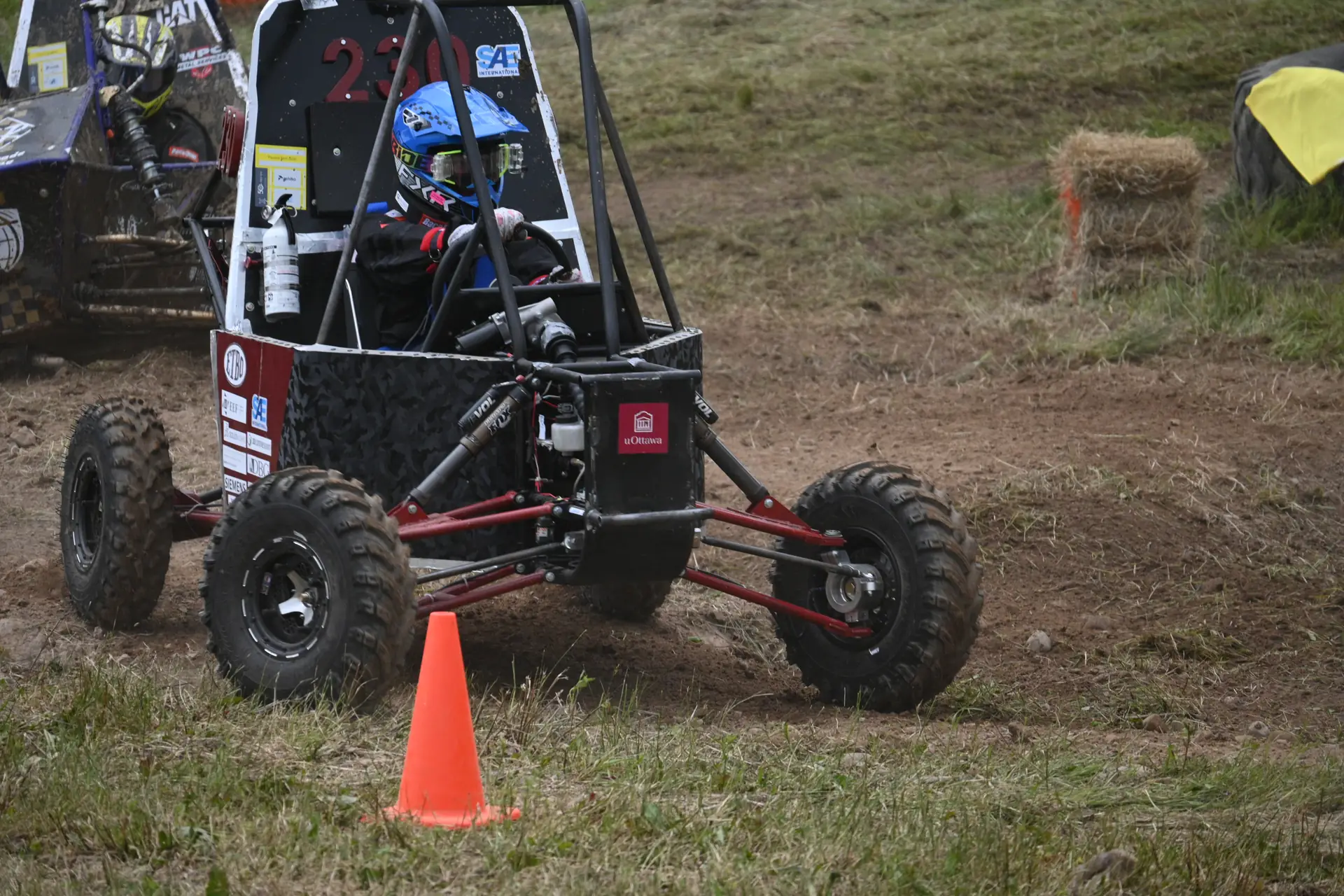
Ten systems. One car.
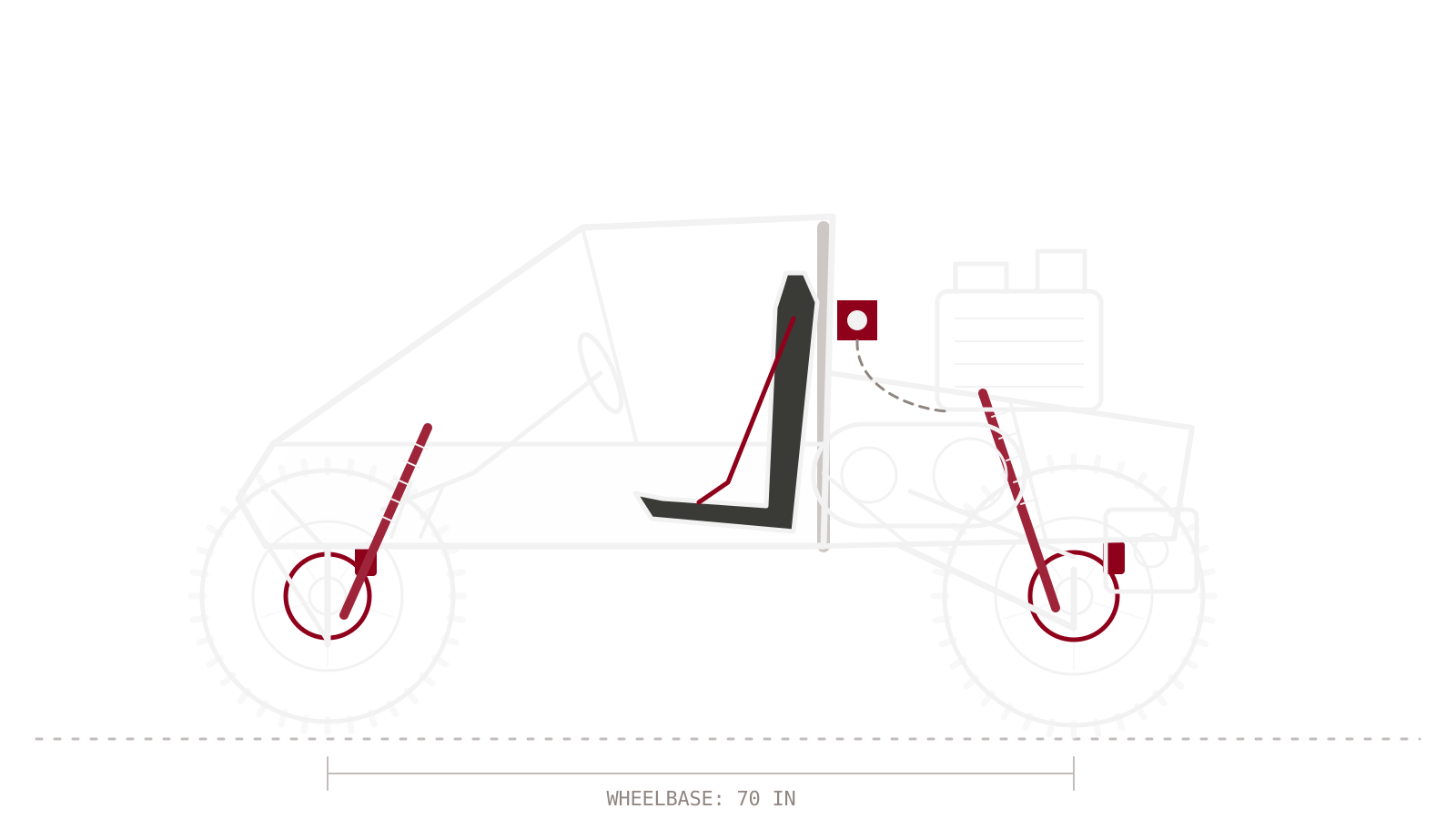
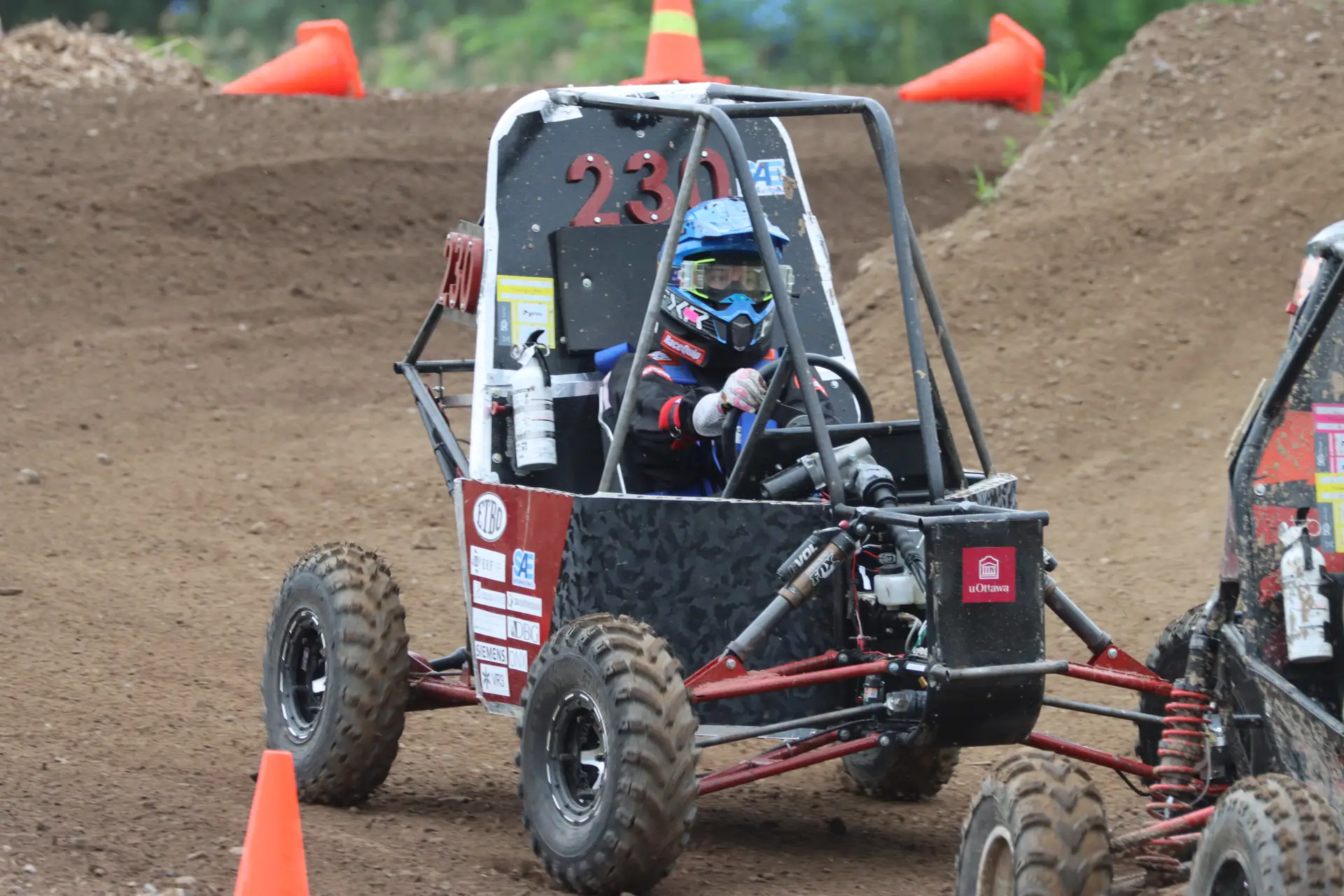
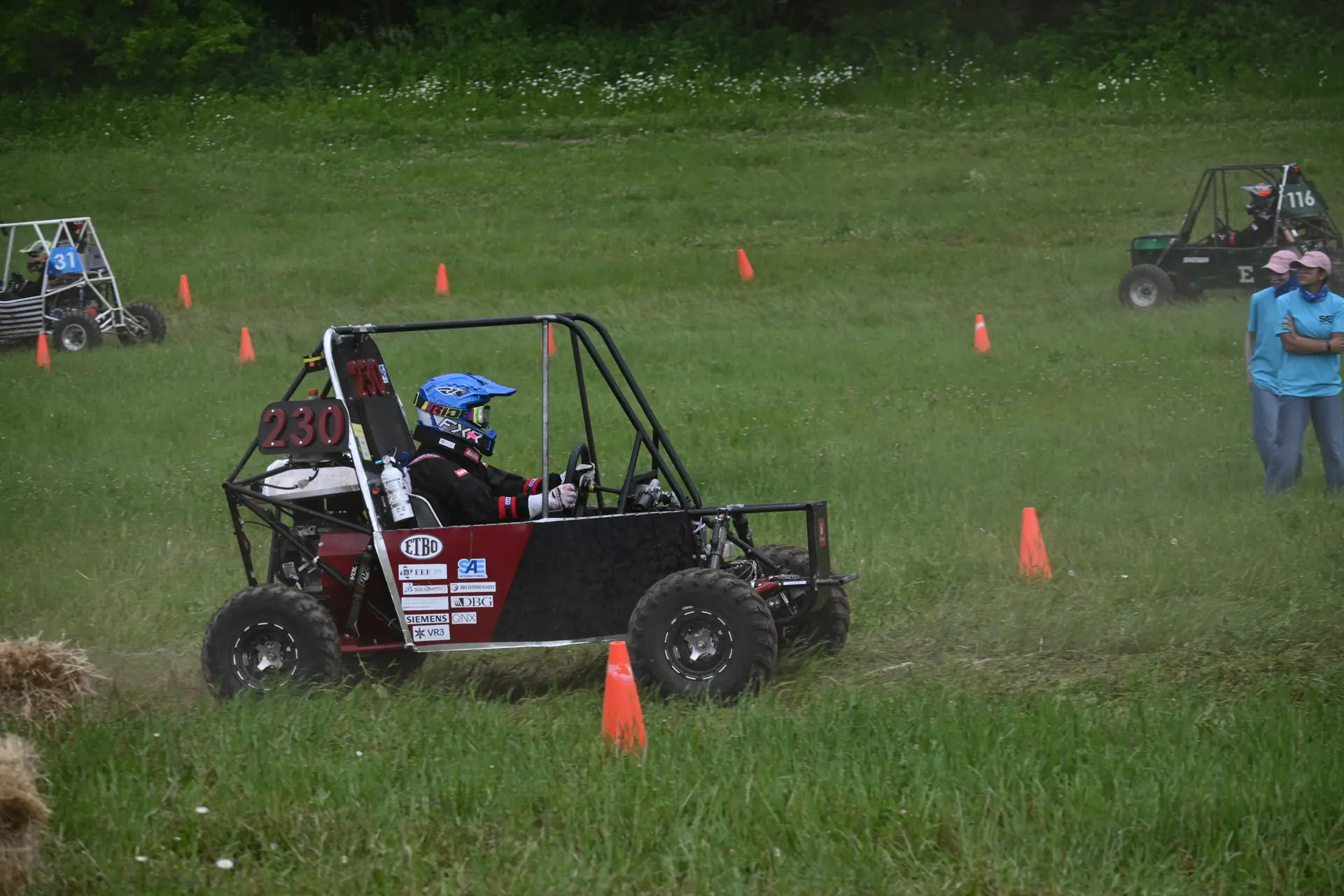
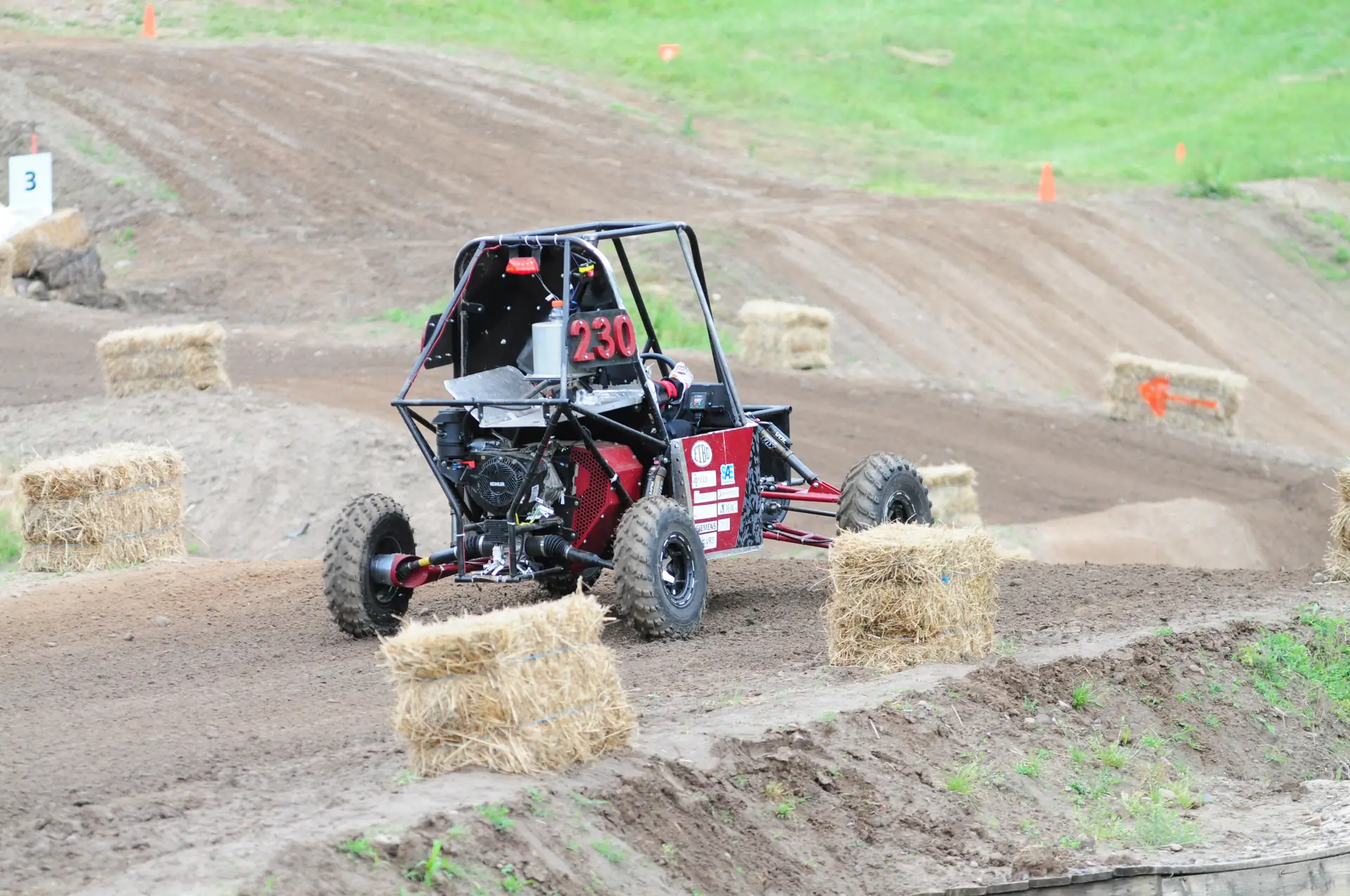
Apart from the rules-specified engine, this single-seat off-road car is designed, analysed, built and tested by students. Scroll to take it apart, or tap any point on the car.
- EngineKohler CH440 · 10 hp restricted
- Drive2WD · tuned CVT
- SuspensionDouble wishbone F · semi-trailing arm R
- BrakesDisc ×4 · 2 circuits
- Wheelbase70 in
- Track width58 in
- Curb weight< 550 lb
Chassis subteam
Chassis & roll cage
A steel space frame with an integrated roll cage, designed for stiffness, driver safety, low weight and easy access to every serviceable part.
- Material4130 steel
- Tubing1-1/4 in OD × 0.065 in wall
- Wheelbase70 in
- Track width58 in
Suspension subteam
Front suspension
Double-wishbone independent front suspension with King 2.0 air shocks, tuned for ground clearance, wheel travel and stability over jumps, rocks and ruts.
- TypeDouble wishbone
- Travel12 in
- ShocksKing PR2008 2.0 air · 8 in travel
- Ride height14 in
Suspension subteam
Steering
A power-assisted steering system built for precise, low-speed manoeuvring on tight courses, where the car has to thread cones, logs and hairpins.
- TypePower steering
- Turning radius8 ft
- Ackermann90%
Drivetrain subteam
Brakes
Hydraulic disc brakes at all four wheels on two independent circuits, able to lock all four wheels, as the rules require.
- Type4-wheel disc
- Circuits2
Chassis subteam
Cockpit & ergonomics
The driver's seating position, controls and visibility are designed around the drivers, all inside the protection of the roll cage and behind a firewall.
- SeatCustom foam inserts
- Harness5-point
- Egress timeUnder 5 s
Electrical subteam
Electrical & data
Safety shutdown circuits and kill switches, driver controls and wiring packaged to stay reliable through mud and water. A sensor network and data logging are in development.
- Kill switches2 · interior + exterior
- SensorsIn development
- LoggingIn development
Rules-specified
Engine
Every team runs the same engine specified by the Baja SAE rules: currently a Kohler CH440, rated at 14 hp stock and restricted to 10 hp for competition. The power is fixed, so the gains have to come from the rest of the car.
- ModelKohler CH440
- Power10 hp (restricted)
- Unrestricted14 hp
- ModificationsNone permitted
Drivetrain subteam
CVT
A tuned continuously variable transmission keeps the engine in its power band from launch to top speed. Tuning it is one of the biggest performance levers on a fixed-engine car.
Drivetrain subteam
Gearbox & final drive
A student-designed gearbox, shafts, hubs and bearings deliver power to a two-wheel-drive rear end, built for efficiency and to survive a four-hour endurance race.
- DesignCustom, designed in house
- Design toolKISSsoft
Suspension subteam
Rear suspension
Semi-trailing arm independent rear suspension with camber links, keeping the driven wheels planted for traction on hill climbs and through rough sections, without giving up durability.
- TypeSemi-trailing arm + camber links
- Travel10 in
- ShocksKing PR2012 2.0 air · 12 in travel
- Ride height13 in